

.png)


See how AI-powered progress tracking helps data center teams identify schedule risks earlier and build with confidence.
Doxel is heading to Singapore for Data Centre World Asia 2026, taking place September 29–30 at the Sands Expo & Convention Centre as part of Singapore Technology Week. As an LED Wall Sponsor, Doxel will showcase how AI-powered Work-in-Place (WIP) tracking and schedule analytics help project teams identify schedule risks earlier, improve coordination, and make faster decisions throughout construction. Come visit us at booth 3G2.
Southeast Asia's data center pipeline has moved fast over the past two years. Singapore is a central hub for hyperscalers, colocation providers, and contractors racing to deliver capacity across a region where power, land, and skilled labor are tighter constraints than in more established markets.
That pressure shows up on the jobsite. Compressed schedules, fragmented regional supply chains, and delivery models that vary market to market all make it harder to know, with any confidence, where a project actually stands. Teams are still leaning on manual walk-throughs and self-reported updates to answer a basic question: is the work installed, and is it on pace with the plan?
Data Centre World Asia brings the people wrestling with that question into one room — five concurrent tracks covering the Global Stage, Keynote Theatre, Energy Security & Efficiency, Critical Infrastructure, and OCP Tech Day. It's a good cross-section of where APAC data center construction is headed, and exactly the audience we built Doxel for.
Doxel turns weekly site walks into objective, component-level progress data, tracking installed work against the plan, flagging schedule risk early, and giving owners, GCs, and trade partners a shared, factual view of where a project stands. No more disputes over whose version of “done” is right.
Teams using Doxel get:
• Automated progress tracking tied directly to the schedule
• Earlier visibility into delays, before they become critical-path problems
• A single source of truth that keeps owners, GCs, and trades aligned
• Benchmarking across projects to spot where production is slipping
For a region building as many facilities, as fast as APAC is right now, that kind of visibility isn't a nice-to-have; it's what keeps a portfolio of projects on schedule.
Doxel's team will be at booth 3G2 throughout the show: Spencer Clayton, Dom Pound-Palmieri, Jesse Gill, Hamza Abukar, and Sridhar Rengasamy, our APAC Lead. Sridhar has spent years working on large-scale infrastructure projects across Southeast Asia and is happy to share his expertise on the region.
If you're attending Data Centre World Asia and want to talk about a live or upcoming project, stop by booth 3G2 or reach out to Sridhar on LinkedIn to set up time.
We'll see you in Singapore.

LCI Congress 2026 is the place to be to see how AI-powered progress tracking gives Lean construction teams objective visibility into project progress, helping improve planning, coordination, and delivery.
Doxel is excited to return as a sponsor of LCI Congress 2026, where owners, contractors, designers, and Lean practitioners will explore the strategies and technologies shaping the future of project delivery. Taking place October 12-16, 2026, in Atlanta, Georgia, LCI Congress brings together construction leaders focused on improving collaboration, reliability, and continuous improvement.
Date: Thursday, October 15, 2026, 3:45-4:30 PM

Panelists:
- Moderator - Chris Vine, LCI-CPC, DBIA, CM-Lean Champion, Project Superintendent, Hensel Phelps
- Speaker - Brandon Bergener, Sr. Superintendent, Layton Construction Company LLC
- Speaker - John Rewolinski, Head of Schedule Analytics, Doxel
Lean construction depends on accurate, timely information. Yet many teams still rely on manual jobsite walks and spreadsheets to understand project status.
Doxel's AI-powered Work-in-Place (WIP) tracking gives Lean teams objective, real-time visibility into construction progress, helping project teams compare plan versus actual performance, improve coordination, and identify schedule risks earlier.
Whether supporting Last Planner System®, Takt planning, or flow reliability, Doxel provides trusted progress intelligence that helps teams make faster, more informed decisions.
Stop by Booth #113 to learn how leading construction teams are using AI-powered progress tracking to:
We're also proud to sponsor the LCI Congress Golf Tournament, including Hole #6 and the TaylorMade Golf Kit giveaway.
LCI Congress 2026 | October 12-16, 2026
Signia by Hilton | Atlanta, Georgia
Visit Booth #113 to how AI-powered progress tracking is helping teams deliver projects with greater certainty, consistency, and confidence.
The conference brings together leaders focused on solving the biggest challenges in AI infrastructure, including prefabrication, digital construction, power availability, and accelerated project delivery.
Doxel is heading to the Builtworlds Buildings Conference: Data Centers & AI Infrastructure to demonstrate how AI-powered progress tracking helps owners and contractors reduce schedule risk and accelerate data center delivery.
AI infrastructure projects are growing larger, faster, and more complex, making objective progress visibility more important than ever.
The event takes place September 30 to October 1 in Nashville, Tennessee. As a Premier Sponsor, Doxel will showcase how AI-powered Work-in-Place (WIP) tracking and schedule analytics help project teams identify schedule risks earlier, improve coordination, and make faster decisions throughout construction.
Thursday, October 1 | 2:10 PM – 2:50 PM

Speakers
What is reality on your jobsite? Your P6 says one thing, your trade partners say another. On a hyperscale data center, having near real-time, objective progress data helps you make better decisions to stay on schedule. In this session, a DPR superintendent and Doxel product leader share real stories from the field: catching a piping trade's slide months before it became a crisis, discovering security rough-ins installed three feet off design, and proving drywall was way ahead of schedule to a skeptical client with a single click.
Join Reid Senescu and Mike Miller as they share how computer vision turns weekly 360° site walks into objective, component-level progress data that keeps trades on plan, settles disputes with evidence instead of arguments, and drives the coordination conversations that build data centers faster. You'll leave with practical adoption lessons—including why a dashboard on the wall beats a hyperlink in an inbox every time.
This year's conference focuses on the challenges shaping modern AI infrastructure, including prefabrication, digital construction, power availability, and project delivery. These priorities align closely with Doxel's AI-powered Work-in-Place (WIP) tracking and schedule analytics, giving project teams objective insight into progress so they can reduce risk and make faster decisions.
Visit Doxel during the conference to learn how leading data center teams are using AI to:
We look forward to connecting with owners, contractors, and technology leaders at BuiltWorlds to discuss how AI-powered progress tracking is helping deliver the next generation of data centers with greater certainty.

Doxel is thrilled to partner with Corscale in revolutionizing the landscape of data center construction, setting a new standard for the industry.
Gainesville, VA – (November, 2023) – Corscale, the exclusive data center platform of the Patrinely Group, has announced that it will be deploying Doxel, the leader in AI automated construction progress tracking to speed the pace of construction and reduce waste on upcoming data center construction.
“Corscale is focused on implementing industry leading construction and sustainability initiatives. We are committed to building efficiently. Doxel will help us accelerate construction schedules and deliver critical data centers faster.” said Nic Bustamante, Chief Technology Officer for Corscale. Prior to his current position, Nic was the Senior Vice President of Development at Corscale and held leadership roles at Apple, Google, and Microsoft.
The rise in artificial intelligence, specifically Natural Language Processing (NLP), computer vision, and machine learning, and robotics, is increasing the already strong demand for data center solutions. Corscale will now harness the power of AI to build the data centers that deliver AI.
“Doxel is thrilled to partner with Corscale in revolutionizing the landscape of data center construction. Corscale’s commitment to industry-leading initiatives aligns with Doxel’s mission to transform construction through the power of AI. We aim to enhance the efficiency and sustainability of constructing data centers, setting a new standard for the industry. This collaboration represents a significant stride toward the future, where AI not only powers data centers but also drives their seamless and sustainable construction.” – Saurabh Ladha, CEO of Doxel.
The partnership with Doxel reflects Corscale’s forward-thinking approach to stay at the forefront of technological advancements. By incorporating AI into the construction process, Corscale not only meets the rising demand for data center solutions but also pioneers a path toward intelligent, sustainable, and swift data center deployment.
Corscale Data Centers is focused on delivering sustainability at scale. As the exclusive data center platform of the Patrinely Group, Corscale, together with its capital partner USAA Real Estate is delivering tomorrow’s data center, today. The company has assembled a top-tier team of industry professionals who bring decades of experience designing, building, and operating sustainable, high-density data centers for some of the largest and most sophisticated hyperscale operators and enterprises. Corscale delivers highly scalable, secure, and energy-efficient build-to-suit powered shells as well as flexible modular deployments. To learn more, please visit Corscale.
Doxel is focused on speeding up construction and reducing waste by using AI to automate progress tracking. Doxel believes in the power of aligned teams and designed Doxel to unlock their full potential. With Doxel, owners have full observability on their site while providing their field teams with powerful tools that prevent delays, over-billing, re-work, and trade stacking. Backed by Insight Partners, Amplo, and Andreessen Horowitz and with a growing team of engineers, scientists and construction veterans, Doxel is driven to help their customers win.
For media inquiries, please contact:
Corscale Media Relations
press@doxel.ai
Doxel Media Relations
press@doxel.ai

Accurate, reliable data allows construction companies to remove subjectivity and replace it with objective accountability.
Communication can make or break a construction project. A report from the Project Management Institute found that ineffective communication was the main contributor to project failure one-third of the time. An even more alarming finding from the research is that 56% of budgets allocated to projects are at risk due to poor communication.
Without objective insights alignment among field and office teams, knowing what’s happening on a project becomes a daunting task—one that could put a project (and its profitability) at risk.
1. Delayed communication
Timely communication (especially between the field and the office) is hard to achieve. Field teams are focused on a hundred different things at once, and relaying project updates typically happens at the end of their day. Because field leaders aren’t able to instantly communicate every facet of a project’s progress as it happens, there is a lag time and gap in each day’s reporting.
2. Inconsistent communication
In addition to being delayed, communication from the field to the office isn’t always consistent. The more variables and people added to the equation, the more potential for confusion and uncertainty. Communication on a project can very quickly turn into a game of telephone—and teams are forced to hold more meetings and conversations to ensure mutual understanding.
3. Missing communication
While delayed and inconsistent communication can hold a project back, missing communication can halt it entirely. If proper communication isn’t happening, neither is profitable building.
All these challenges in communication don’t just create extra stress and work on a project—they can have a deeper impact on the data and tracking, too. Without everyone on the same page, the reporting and insights are left to everyone’s individual perspective. As a result, the project’s insights suffer.
Accurate, reliable data allows construction companies to remove subjectivity and replace it with objective accountability. Insights that are trackable and consistent bring everyone together on the same page to make informed decisions, faster.
Improve communication and progress tracking
Streamline billing and accountability
The key to collecting reliable insights is through automated progress tracking. The right tool can increase team alignment and communication, without adding effort to the project team’s plate.
Doxel brings predictability to construction projects by providing critical insight with objective analytics. The AI-powered computer vision builds a digital twin of the jobsite on a weekly basis—providing true progress reporting and near real-time data. Doxel acts as a digital surveyor to capture and quantify project progress and eliminates the need for teams to manually calculate and report on it. The result is detailed, shared progress tracking from a single source across every project stakeholder and subcontractor.

Strategies for maintaining a healthy work-life balance.
Doxel CEO Saurabh Ladha is featured on The QTS Experience Podcast with David McCall. David and Saurabh discuss the impact of waste and rework in construction.
Saurabh discusses how Doxel integrates AI with established processes to build faster. Join us for the conversation, on the next QTS Experience. Episode 191; Saurabh Ladha: Intuitive Construction, AI, Doxel, Innovation, Data Center.

Advice for maintaining mental health in the workplace.
Many construction companies are at a crossroads as they think about the future of their business, and who will be a part of it.
More than 40% of the current U.S. construction workforce is expected to retire over the next decade. This generation of seasoned superintendents and project leaders will leave behind big shoes to fill in both skill and knowledge, and the industry’s current skilled labor shortage doesn’t exactly help either.
While many owners, GCs and trade contractors have programs in place to mentor younger generations and train them to step in, it won’t be enough to bridge the gap. That’s why it’s important for companies to ensure they are innovating to attract more workers of a new generation.
The construction industry has made huge strides to change and adopt more technology, but it can’t stop now. The younger generation that’s coming into the workforce over the next ten years was raised in a time where technology was already prevalent and is like second nature to them.
If a company wants to attract and retain a new generation of field leaders, they need to have processes in place that don’t just utilize technology, but are on the forefront of innovation, too.
A project isn’t truly done until it’s done done. And whether or not it gets to done done on time and under budget all comes down to how it’s being tracked during the construction phase. The old way of progress tracking involves a ton of manual effort and even more paper. Field teams would have to document what happened by hand on a regular basis and manually report on the overall progress completed.
Not only was this inefficient and extremely time-consuming, it also made it nearly impossible to try to predict where the project was headed or spot any potential issues fast enough to fix them. Even with the utilization of 3D and BIM models, knowing where a project stands hasn’t been as automated as it should be.
Convincing new, younger workers to take on these outdated processes isn’t an easy sell. Chances are, they’ll feel their time is being wasted since they are so used to the convenience and automation that technology can bring. In order to attract more workers to be on project and field teams, the processes they follow need to be seamless and even a little exciting.
Construction companies that are leveraging artificial intelligence and machine learning to automate the collection and analysis of project data are already ahead of the game. While the new generation may be more traditionally more technologically savvy, AI is new and exciting to everyone.
Rather than spending hours per week manually inputting and calculating progress and materials, solutions like Doxel use AI alongside 360-degree capture to automatically identify true, objective progress. This ability to bring predictability to projects doesn’t just save field teams time—it provides critical insights that help avoid delays and cost overruns at the overarching project level.
Instead of them feeling like just another cog in the machine there to collect data over and over again, technology of this caliber empowers workers to think critically about the status of projects and seek a deeper understanding of what’s happening each day. Not to mention the sense of fulfillment that comes when a team works together on a project that is able to be completed earlier with increased safety, less expense, and higher quality.
We can help you empower a new generation of field leaders. See how Doxel works in a personalized demo today.

Doxel’s computer vision-based progress tracking leverages AI to act as a digital surveyor that delivers insights and reporting in real time.
Now more than ever, construction companies are looking for ways to stand out from the competition—and that starts with staying on top of the latest technology that helps them build more efficient, profitable projects.
The future of construction technology will be a hybrid of artificial intelligence (AI) and machine learning working alongside the industry’s workforce.
But what does that mean?
Put more simply, artificial intelligence is the brain of the computer, and machine learning is the part of that brain that learns from data and makes informed decisions based on what it has learned.
Computer scientists have found a way to make the process of designing a building more efficient and accurate. By starting with the goals and parameters of a project, generative design is able to explore every possible iteration of a solution until it comes up with the best option.
This technology and its use has the potential to save architects and designers countless hours upfront—but it doesn’t replace the human touch completely. Once the optimal solution is found for the design of a building, a designer still needs to fine-tune the details and take it from there.
Robots are being utilized on construction projects to perform repetitive tasks (such as bricklaying) using AI to detect changes in conditions and maximize efficiency. While only a few robots have been added to the project ranks so far, it is expected that more of these AI-powered workers will be used as a method of streamlining productivity.
What’s our favorite robot in construction, you ask? Meet Spot: a robot dog created by Boston Dynamics used to carry image-capturing or laser scanning equipment that ventures where humans can’t. Spot’s ability to walk himself autonomously around a jobsite, including on uneven terrain, makes him a project’s best friend. Spot may not have AI infused into his DNA yet, but the future generations of Spot will incorporate AI for predictive and preventative analysis.
Milwaukee Tool first dabbled into the technology space with their wirelessly connected tools, but they’ve since enhanced their capabilities with AI to pinpoint the exact locations of where a tool was last seen. And they didn’t stop there—by adding algorithms and more advanced sensors to their tools, Milwaukee is able to combine the data of a motor drive with motor load information to make decisions on false trips.
It should come as no surprise that these technological concepts are being applied to the most important priority in construction: safety. Companies like NewMetrix have created an AI-powered solution to help predict (and prevent) safety incidents on projects.
By leveraging a construction-specific AI model, their platform can analyze existing data along with their proprietary program to provide actionable incident insights that have the power to keep workers safe.
While BIM has opened the door for 3D modeling of a project, it’s still nearly impossible to tell the progress or quality of a build without a human resource to manually sift through and analyze images. That is, until now.
Doxel’s computer vision-based progress tracking leverages AI to act as a digital surveyor that delivers insights and reporting in real time. It can automatically analyze visual data, measure installed quantities, and inspect quality for more than 75 different construction stages. This not only saves companies time, it also mitigates the risk of errors and delays that could become costly.

Putting the model in the hands of field teams every step of the way gives them immediate access to see where their efforts line up (or don’t) for the project.
Ever since the pandemic, QR codes have had a resurgence in society. When the world turned contactless, restaurants and businesses began leveraging QR codes for menus and signage. These small codes have since become a go-to for pulling up web pages quickly and conveniently.
As QR codes continue to become more prevalent, other industries have taken note and discovered ways to leverage them—and construction is no exception.
But before we get into that, let’s cover some basics.

The ‘QR’ in QR codes stands for Quick Response, which makes sense when you think about the way they work. By pointing a device’s camera at the code, a destination link is pulled up and can be accessed instantaneously.
While they may have become most popular after 2020, these codes are not a new technology. QR codes were first created in 1994 by the Japanese company and Toyota subsidiary Denso Wave as a more accurate way to track vehicles and parts during the manufacturing process. The original intention behind QR codes was to reinvent the barcode by making something that was easy to scan and could hold more data than the average barcode.
In a time where businesses needed to (and continue to) adapt, QR codes and smartphones have become a powerful duo to further streamline access to information.
It’s no secret the construction industry is facing some challenges. From labor shortages to supply chain, the circumstances have further shown the importance of operational excellence on a project. To help combat these challenges, maintain a high standard of execution, and minimize risks of mistakes, many construction companies have found technology to be the answer.
Can QR codes play a part in this? In our webinar Almost Done Isn’t Done, one Doxel customer shared his team’s innovative way of incorporating QR codes around the job site to bring everyone on the same page, faster.
By strategically placing QR codes around key points of the job site, all the contractors for the project are able to instantly access the corresponding models and plans needed. That way, when the contractor is getting ready for the install or build, they can simply scan the QR code to confirm what they need to accomplish.
Putting the model in the hands of field teams every step of the way gives them immediate access to see where their efforts line up (or don’t) for the project. This makes it easy to ensure accuracy while progress is being made versus waiting until it’s too late.
How do companies make their own custom QR codes? Here’s a handful of solutions to consider:
While this technology is helpful enough on its own, the destination of the QR code is what can really make the difference on a project’s path to operational excellence.
Let’s talk about what happens when laser scanning and real-time progress tracking join the party.
Doxel’s AI-powered tool automatically maps and overlays 360-degree video to the BIM and 3D models. The split view allows teams to quickly understand what’s in progress and what’s done, along with the quality of installed systems.
Site progress is automatically quantified and visualized and can be differentiated by trade to compare what’s there to what should be—and as a result everyone is objectively aligned on true progress.
Imagine all this at the touch of a button, a scan of a code. With the convenient access of QR codes connected directly to Doxel, field teams can better (and more instantly) answer two of a project’s biggest questions:
Are things where they are supposed to be?
Are we on schedule?
By having the color-coded, easy to understand analysis of progress just a QR code scan away, project teams can be more proactive and accurate in their work.
If you’re ready to take your project models to another level, schedule a demo of Doxel today.

Work In Progress reports provide accurate progress data that project teams can trust across the entire site.
Construction is a unique industry in many ways, one of which being the flow of cash and accounting process for projects. Whereas many industries have straightforward transactions and payments, construction costs tend to be more complex and nuanced—which makes it more difficult to stay on top of a budget with money constantly going out and coming in.
From estimation and bidding to delays and change orders, there are many stages and factors that go into determining the cost (and profits) of a project.
How can companies know if they’re on schedule and under budget before the project closes? Work in progress is the answer.
A work in progress (or, WIP) schedule is a detailed report that shows the percentage of progress completed on a project—and takes into account any work that’s in progress in relation to budget and profitability. Below are four reasons WIP Reporting is essential on every project!
When it comes to a project’s progress, communication is critical. Without clear, real-time communication, project teams waste valuable time meeting to discuss and determine where a project stands. Progress can also be misrepresented or miscalculated, which directly impacts the budget and schedule of a project. With so many moving parts to balance, construction companies can’t afford to make mistakes due to miscommunication.
WIP reports provide accurate progress data that project teams can trust across the entire site. This reduces any subjectivity throughout the building process and gives everyone one source of truth to work from.
Many contractors choose to implement progress payments, which means the project is billed based on certain percentages of completion as they’re reached instead of waiting until the end of a job. Combine progress payments with inaccurate progress reporting, and the project can very quickly become overbilled (revenue billed exceeds the work completed) or underbilled (work completed exceeds what’s been billed).
WIP tracking provides the exact progress percentage of work completed to create a shared understanding and accountability for project costs accrued so far—and can help shed light on any discrepancies in the budget to prevent future cash-flow problems. This is especially helpful for those project managers who like to ‘guesstimate’ based on a gut feeling, then try to do the math later to even it out.
Hindsight may be 20/20, but it won’t keep your project profitable. A problem is much harder to fix after it’s already happened. While discussing what went wrong at the end may help your next project, the power to be able to notice and act in real time is invaluable. Project teams need to be able to spot potential problems as early as humanly possible to minimize the impact and keep everything on track.
That’s where work in progress tracking comes in—it’s in the name. Using technology that quantifies progress all the way down to the subcomponent level allows stakeholders to catch an issue and course correct as soon as (if not before) it happens. This prevents mistakes from becoming costly and provides insight for better business decisions in the future.
While catching issues early on is one thing, being able to predict a project’s future is another. With the right AI-powered progress tracking, companies can track project performance for deviations from plan and forecast a more accurate estimate at completion.
Knowing where your project is heading before you get there means you can plan accordingly and get ahead of costly trends. WIP tracking data gives project teams the ability to confidently manage the schedule and predict delays.
At the end of the day, work in progress reports give a true and accurate view of the financial health of a project. However, they require accurate project progress data to be effective.
Companies that leverage technology with AI-powered progress tracking can truly reap the benefits of WIP reports—and ultimately keep their projects on track and profitable.

By letting the AI automatically analyze visual data, construction companies are able to measure installed quantities and inspect quality—without having to sift through data or manually record the entire jobsite.
Construction—an industry that’s been around for nearly as long as civilization—is long overdue for a change in the tools used to build the world. While technology has become more and more common on a jobsite, most of it has been focused on taking companies from pen and paper to digital data and drawings. This is a step forward, but still requires a significant amount of manual effort and calculations to be effective. One tool alone may not completely transform an industry, but the right technology in combination could unlock the secret to more profitable and productive projects. That’s where machine learning comes in.
When you hear the term “machine learning” or “AI” (artificial intelligence), your mind probably goes straight to what you’ve seen in movies and television. While there isn’t a terminator on a jobsite (yet), construction companies are beginning to leverage an entirely new generation of technology to further reduce manual effort and increase visibility and insights.
A lot of the existing construction technology leverages visualization software to overlay captured data onto a 3D design. While this helps add an extra layer of visibility, it won’t tell you much more about true progress without someone having to look through every photo and laser scan. When given the choice, most jobsite managers would rather walk around and measure progress manually than spend even more hours doing it on the computer.
Computer vision-based progress tracking takes it one step further. By letting the AI automatically analyze visual data, construction companies are able to measure installed quantities and inspect quality—without having to sift through data or manually record the entire jobsite. What used to take someone hours is now an automated, real-time progress and quality report they can access anytime.
Imagine being able to automatically track more than 75 different construction stages and generate progress, down to the materials installed, and all it takes is a 360° camera, BIM, and AI-powered platform.
This automated progress tracking isn’t just for the project teams. Traditionally, if an owner wants a project update, they either have to physically come to the jobsite or rely on the reporting of project managers and subcontractors. This reporting takes valuable time, and is often incomplete and delayed (or missing entirely) depending on how busy the team is.
AI platforms take the burden off of project teams by enabling them to capture more detailed data, faster. Artificial intelligence can essentially act as a digital surveyor to capture hundreds of thousands of square feet on a project every week—freeing field crews up to focus on making progress, not reporting on it. Those uncomfortable OAC and weekly trade coordination meetings where progress isn’t clearly measured or communicated can quickly become a thing of the past.
Real-time project visibility allows companies to spot potential issues or overruns faster, and gives them enough time to make changes before it’s too late.
In construction, the four biggest factors to a project’s success are time, money, quality, and productivity. The right balance of these factors could mean the difference between coming in on time, under budget and losing money on a project. The increased visibility and reporting that AI-based software gives managers can directly translate to real-time feedback on schedule, budget, and quality.
Machine learning provides companies objective schedule and cost budget analysis to ensure everything is progressing to plan, and can prevent costly rework or delays. It isn’t enough to be able to see what’s happening as it happens—companies need to be able to look into the future of a project using predictive forecasts, too (another AI specialty).
Real-time feedback and insights have the power to take construction companies to a new level of project success. Machine learning isn’t about replacing people with machines. It’s about leveraging automated, artificial intelligence to increase productivity and visibility so teams can make better business decisions, faster.
Doxel is attending DCD>Connect APAC 2026 in Bali to discuss AI infrastructure, data center construction visibility, and reducing delivery risk across fast-growing APAC markets.
Doxel is heading to on June 9–11 at the Grand Hyatt Bali to participate in DCD>Connect APAC 2026
As AI infrastructure demand accelerates across Asia-Pacific, developers, operators, and construction teams are under increasing pressure to deliver capacity faster while managing growing project complexity.
APAC has quickly become one of the world’s most active regions for data center expansion. Markets across Southeast Asia, Australia, and India continue to see rapid investment from hyperscalers, colocation providers, and digital infrastructure firms racing to support AI workloads and cloud growth.
At the same time, the challenges facing project teams continue to intensify.
Data center facilities are becoming larger, denser, and more complex. Regional supply chains remain fragmented. Skilled labor availability varies significantly by market. Power constraints and permitting pressures are increasing in key hubs. Teams are being asked to build faster than ever before while maintaining certainty around schedule, quality, and coordination.
Industry research from McKinsey & Company shows that global construction productivity has remained largely stagnant for decades despite increasing project complexity and demand. The report notes that productivity in construction improved only 0.4% annually between 2000 and 2022 while labor shortages continue to worsen across major markets.
That challenge is becoming increasingly visible across APAC data center construction.
DCD>Connect APAC brings together many of the operators, developers, contractors, and infrastructure leaders shaping the future of AI and digital infrastructure across the region.
Unlike more mature markets where expansion is often constrained by existing infrastructure limitations, APAC remains heavily growth-focused. New facilities are being delivered across multiple countries simultaneously, often with compressed schedules and evolving delivery models.
This year’s event focuses heavily on the future of next-generation AI infrastructure, modular delivery strategies, localization approaches, and the operational realities of scaling hyperscale infrastructure across APAC.
For Doxel, these conversations align directly with the challenges teams are facing in the field today.
Doxel helps owners and construction teams improve visibility, coordination, and delivery performance across complex capital projects through automated progress tracking and AI-powered construction analytics.
Doxel enables teams to:
Doxel’s platform helps eliminate gaps in manual reporting by providing objective, real-time insights into what is actually happening on-site.
Companies like DPR use Doxel to improve project visibility, benchmark build speeds, and drive more objective production tracking across projects. As APAC data center projects grow larger and more complex, real-time visibility into field execution becomes critical to maintaining schedule certainty and reducing delivery risk.

Doxel’s APAC Client Manager, Sridhar Rengasamy, will be attending throughout the event and meeting with owners, operators, developers, and delivery teams across the region.
Sridhar has worked on large-scale infrastructure and capital projects across Southeast Asia totaling up to $550M in value, partnering closely with contractors and consultants to improve coordination, strengthen execution, and mitigate delivery risk across complex multi-stakeholder environments.
If you’re attending and want to discuss live or upcoming APAC projects, connect with the Doxel team during the event. To schedule a meeting, please reach out to Sridhar on LinkedIn.
Addressing Workforce Constraints in Data Center Construction
The Data Center Investment Conference and Expo (DICE): National brings together owners, operators, and builders at a time when data center demand continues to rise while the available workforce remains constrained.
Industry research shows that construction productivity has improved only modestly over the past two decades, even as project complexity has increased and labor availability has tightened. For teams delivering large-scale data center projects, this creates pressure on schedules, coordination, and overall execution.
Doxel is excited to attend DICE National, joining industry leaders as they share how teams are approaching these challenges in real project environments.
May 12–14, 2026
Day 1 Session | 2:10 PM – 2:50 PM







The panel includes perspectives from owners and operators who are directly responsible for delivering complex infrastructure programs.
The discussion will focus on how organizations are adapting to workforce constraints while maintaining delivery timelines and quality standards. Key topics include:
These challenges are not isolated to hiring. They affect how projects are planned, tracked, and executed from day one.
Doxel approaches workforce constraints as an execution and visibility challenge. When labor availability is limited, improving how work is tracked and managed becomes critical.
Doxel provides:
On data center projects with partners such as DPR Construction, this approach has supported a shift toward more consistent, data-driven benchmarking and improved confidence in project decision-making.
Data center projects require precise coordination, tight schedules, and rigorous quality control. Workforce limitations increase the risk of delays, rework, and misalignment between teams.
Improving visibility into project progress allows teams to:
This level of visibility helps teams maintain performance even when labor conditions are challenging.
This session will provide practical insights from industry leaders managing workforce constraints on active projects.
For owners, developers, and contractors involved in data center construction, it offers a clear view into how execution strategies are evolving.
Where Speed Meets Precision in Data Center Construction
The pace of data center construction has changed.
Schedules are tighter. Labor is harder to find. And the tolerance for error is almost zero. Owners and builders are being asked to deliver faster than ever, often on projects where even a small delay can cascade into millions in lost revenue.
That’s exactly why Doxel is heading to the DICE Pacific Northwest Data Center Investment Conference & Expo.
This event brings together the investors, developers, contractors, and technology leaders shaping the next generation of digital infrastructure. And this year, one topic is rising above the rest: How do you build faster without losing control?
The demand for data centers continues to surge, but the industry’s ability to deliver them has not kept pace.
Global construction productivity has barely moved over the last two decades, increasing just 0.4% annually, even as project complexity has grown dramatically
At the same time:
The result is a widening gap between what needs to be built and what can be delivered.
To close that gap, leading teams are rethinking how projects are executed. They are combining modular construction strategies with real-time, objective visibility into progress.

Speaker: John Rewolinski, PSP, Head of Scheduling Analytics, Doxel
Session Title: Speed Meets Precision: How Modular Delivery and Construction Tech Are Redefining Data Center Execution
This session focuses on a simple but critical challenge: Speed alone is not enough. Precision is what keeps speed from turning into rework.
Attendees will learn:
Most construction teams still rely on a familiar process:
The issue is not effort. It’s timing. By the time a deviation shows up in a report, it’s often weeks old. On a data center project, that delay can mean:
Doxel changes that dynamic by delivering objective, automated progress tracking that compares actual site conditions directly to the BIM model and schedule.
Instead of asking what’s happening, teams can see it.
Doxel was built for complex, fast-paced projects where precision matters.
With Doxel, teams can:
This approach eliminates manual reporting gaps and gives teams a consistent, accurate view of the jobsite
The impact is clear:
Construction is not getting simpler. But it is becoming more measurable.
With the right combination of modular delivery, AI-driven insights, and objective progress tracking, teams can finally deliver projects at the speed the market demands without sacrificing quality or control.
Doxel is helping lead that shift. See Doxel today.
When the scan says "not installed," and the trade says "we did it," the answer might be a quality problem, not a data error
▶ WATCH THE FULL PRESENTATION
Computer Vision Is the Andon Cord Construction Has Always Needed
LCI Conference 2025 · Reid Senescu, Doxel & Mike Miller, DPR Construction
Doxel's system was designed to track progress, but on a hyperscale data center project with DPR Construction, it caught something that no daily report, RFI, or schedule update had flagged, and the lesson that came out of it changed how the team interpreted data discrepancies entirely.
The story starts with a flag. Doxel's AI detected uninstalled security components near certain doors. The electrical trade partner pushed back hard, claiming they had roughed in all the security to those doors. In their estimation, the work was done.
After further investigation, the team found the truth: the security boxes had been installed. Three feet to the right of where they were supposed to be.

The components had been physically installed, but they were mislocated relative to the BIM. When comparing the 360° site photos against the model, Doxel’s AI correctly identified them as not installed in the designated location.
"If something's showing as not installed and the trade partner says it's installed, we probably have a quality control problem. Not the intended use case — but awesome to see."
— Mike Miller, Superintendent, DPR Construction
The team had stumbled onto a new interpretive principle. When Doxel flags something as missing and the trade says it's done, don't default to assuming the data is wrong. Investigate. The discrepancy might not be a tracking error; it might be a quality flag.
Mike was direct about what happened next and what it cost. Rework followed. But by investigating when they did, the team headed off even higher costs than if the issue had been found later.
REWORK WARNING: Dismissing data because it contradicts expectation is how quality issues get buried. The cost of investigation is almost always lower than the cost of rework — especially once walls are closed.
This is not an abstract lean principle. It played out on a real job, on real infrastructure, with real rework costs. The lesson is practical: when scan data and field reports disagree, treat the disagreement as information, not noise.
Construction quality management has traditionally relied on scheduled inspections, trade self-reporting, and periodic walkthroughs. These methods work reasonably well for obvious defects. They are poor at catching components that are physically present, but are installed in the wrong place relative to the design.
Computer vision can fill this gap by comparing what is physically present against the BIM at the component level across all visible trades every week. Mislocations look identical to missing components from the system's perspective, because in both cases, the component is not where it should be.
The practical recommendation from Mike's experience is to establish a protocol for investigating discrepancies rather than defaulting to dismissal. When a trade reports complete and the system reports incomplete, send someone to review the discrepancy. It only takes minutes, but it can prevent weeks of rework.
There is a secondary benefit this story highlights: objective, time-stamped documentation of installation location for every component. On a complex facility like a data center, where systems are dense, and modifications may be needed years later, having a record of where things were actually installed, not just where they were designed to go, has ongoing operational value.
This use case wasn't in the sales deck. It emerged from a real disagreement on a real job. That's often how the most durable capabilities get discovered.
Doxel is proving that transforming an industry starts with the people behind it.
Doxel has been recognized by Forbes as one of America’s Best Startup Employers, highlighting the company’s rapid growth, strong culture, and commitment to developing talent in construction technology.

The annual Forbes ranking evaluates thousands of startup companies across the United States based on employer reputation, employee satisfaction, and growth. The recognition reflects the impact Doxel has built not only in transforming construction productivity but also in creating a workplace where employees can build meaningful careers.
You can see the full list here.
Doxel develops AI-powered construction progress tracking technology that helps owners and contractors deliver projects faster and with greater certainty. By automatically capturing jobsite data and comparing it to BIM models and project schedules, the platform provides objective visibility into construction progress and productivity.
The system helps teams eliminate manual reporting, gain objective insights, and make faster decisions across complex construction projects.
For Saurabh Ladha, CEO and Founder of Doxel, the Forbes recognition reflects years of commitment to both innovation and people.
“Our mission has always been to transform how the world builds. That requires not only great technology, but great people. Being recognized by Forbes as one of America’s Best Startup Employers is a testament to the incredible team we have built at Doxel.” - Saurabh Ladha, CEO and Founder of Doxel
Ladha added that solving construction’s productivity challenges requires long-term thinking and strong collaboration across engineering, product, and customer success teams.

Employee satisfaction has played a major role in Doxel’s recognition.
The company currently maintains a Glassdoor rating of approximately 4.1 out of 5, reflecting strong employee feedback on leadership, culture, and career opportunities.
Many employees highlight the opportunity to grow quickly within the organization and take on new responsibilities as the company scales.
“If you’re looking for a fast-growing company that genuinely supports career progression, values its people, and maintains a strong culture as it scales, Doxel is a great place to be,” said one account team member.
Another employee noted that Doxel’s leadership actively supports internal promotions and professional development.
“The career advancement opportunity has been great! I've been given several opportunities to be promoted to higher leadership roles over the past few years.”
Construction remains one of the world’s largest industries, yet productivity has stagnated for decades. According to research from McKinsey, construction productivity grew only 0.4% annually between 2000 and 2022, far behind gains in manufacturing and the broader economy.
Doxel’s technology addresses this challenge by providing automated, objective progress tracking across construction sites. The platform scans projects, compares actual progress against plans, and helps teams identify schedule risks earlier.
Companies using Doxel gain:
These insights allow project teams to make faster decisions and keep complex projects on track.
For Doxel employees across engineering, AI research, and customer success, the opportunity to solve real problems in construction has become a major motivator.
“We’re not just building software,” said Reid Senescu, Sr. Vice President of Product, Marketing, and Customer Success. “We’re helping an industry that builds hospitals, data centers, and infrastructure deliver projects faster and with more certainty.”
That mission has helped Doxel attract talent from both technology and construction backgrounds, creating a team with deep expertise across AI, robotics, and capital project delivery.
The Forbes recognition highlights Doxel’s momentum as the company continues expanding its technology platform and customer base across major global construction projects.
For Ladha, the award reflects the culture the company intends to preserve as it grows.
“Our goal is to build a company where talented people can do the best work of their careers while solving meaningful challenges for the construction industry.”
- Saurabh Ladha, CEO and Founder of Doxel
How AI progress tracking gives superintendents a signal weeks before a delay becomes a crisis
LCI Conference 2025 · Reid Senescu, Doxel & Mike Miller, DPR Construction
Every superintendent knows the feeling: a trade partner reports they're on track, the schedule says green, and then, one week before a milestone, the reality hits. The work isn't there. The cascade starts. The conversations get harder.
The problem isn't that anyone is lying. The problem is that construction progress has always been measured the same way: someone walks around, someone asks, someone estimates. By the time a deviation surfaces through normal reporting channels, weeks have passed, and the cost of recovering has multiplied.
Data-driven construction executives are disciplined in leveraging technology and processes to capture crucial information about their projects. At LCI Conference 2025, DPR Project Executive Mike Miller described how automated progress tracking changed that dynamic on his hyperscale data center project, starting with a piping trade partner whose slip he could see forming in real time.
Starting in December, Doxel's computer vision system began showing a divergence between the piping trade's actual installed quantities and their planned schedule. Not a dramatic gap at first. Just a signal.
Under traditional reporting, that gap might not have surfaced until a formal schedule update meeting or until it cascaded into delayed downstream trades. With automated tracking, Mike could see it forming week by week, grounded in automated progress tracking rather than self-reporting.
"As a leader, you only have so much time to focus on certain things. I can't focus on everything all the time. I can see who's on plan and I can focus where we have the risk."— Mike Miller, Project Executive, DPR Construction
What followed was a textbook plan-do-check-act (PDCA) loop. The trade was brought to the table. The data was shared. Initially, there was resistance — new tools, new data, trust takes time. But by year-end, the team accepted the picture and decided to add resources. Check the result. Adjust again if needed.
Mike called it "bread and butter." The system is working exactly as it should.

KEY INSIGHT Early detection gives leadership the visibility to have the right conversation at the right time.
The lean parallel is direct. In manufacturing, the Andon cord's value isn't the cord itself; it's the organizational culture that responds to it. Doxel's computer vision functions as a continuous Andon cord across the entire job site, flagging deviations the moment they're detectable, not weeks later when they've compounded.
Reid Senescu, Head of Product at Doxel, described the underlying principle: construction sites have historically lacked the sensor layer that lean manufacturing has always relied on. No factory would operate without real-time feedback on production output. Yet construction, which is far more complex and expensive, has run primarily on estimates and walking the site.
The system takes three inputs:
Computer vision compares the scan against the BIM to determine what has been physically installed at the component level across all trades and at every stage of construction. A large language model ties the schedule to the BIM, producing a real-time 4D view of the actual project state versus the planned state.
The result: trade and project-level progress data grounded in physical observation rather than self-reporting, updated at least weekly, with no additional engineering work required for onboarding.
Doxel has captured over 3 billion square feet of construction. That dataset powers the "rules of credit" — weighted effort models that let the system aggregate component-level data up to an accurate project percent complete.
What This Means for Owners and GCs
For owners, the implication of this story is straightforward: the capability exists to monitor capital investments in construction with the same rigor applied to financial data, inventory, or operational metrics. Requiring automated progress tracking in the RFP: specifying that it must cover all visible trades and at least 80 stages of construction is the most direct way to ensure this capability is on every project.
For GCs like DPR, the story is about competitive differentiation. The teams that build trust in objective data and act on it early catch problems before they cascade. They spend less on rework and recover faster.
The Andon cord is finally available for job sites. The question is how quickly the team can respond when it sounds.
Lean isn’t just a principle — it’s how Doxel is pushing the industry forward. That’s why we’re excited to join the 2025 LCI Congress in Arlington, Texas.
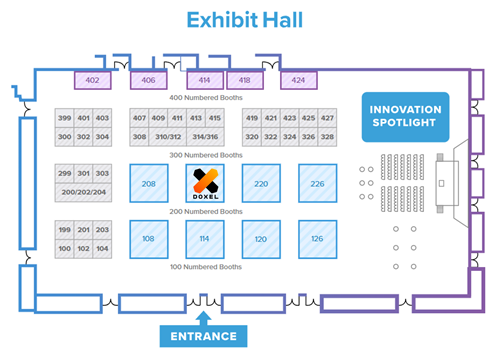
Doxel is proud to sponsor the 27th Annual LCI Congress in Arlington, TX, October 20–24, 2025. Visit Booth #214 to see how we help teams pioneer Lean progress with real-time, AI-powered insights.
📅 October 20–24, 2025
📍 Arlington, Texas
📍 Doxel Booth #214
🔗 Join us at LCI Congress
The Lean Construction Institute (LCI) is celebrating its 27th Annual Congress in Arlington, Texas, bringing together leaders from across the AEC industry for a week of education, networking, and Lean discovery. This event is recognized as the premier gathering for advancing Lean design and construction practices, where owners, designers, trade partners, and contractors come together to share knowledge and transform the way projects are delivered.
With the theme of pioneering progress through education, networking, and Lean discovery, LCI Congress offers attendees the opportunity to:
At Doxel, we believe Lean principles are more than a framework—they are the foundation for building certainty into every project. Our AI-powered progress tracking platform provides the objective, real-time insights teams need to eliminate waste, optimize resources, and stay ahead of schedule.
By combining computer vision with automated benchmarking, Doxel helps owners and builders align field reality with Lean schedules, creating a living plan that adjusts based on actual progress. This empowers teams to:
We are proud to sponsor LCI Congress 2025 and showcase how our platform helps advance Lean construction practices. If you’re attending, visit us at Booth #214 to see how Doxel enables real-time observability and creates confidence in delivering projects faster and more reliably.
Learn more about the event and register here: LCI Congress 2025
Meet Doxel at Procore Groundbreak 2025 in Houston, Oct 14–16. See how AI-powered insights drive faster, more predictable project delivery. Booth 233.
Groundbreak brings together global leaders and industry experts who are setting a new standard for construction. This October, join Doxel in Houston, TX for Procore Groundbreak 2025 as we connect with innovators, problem-solvers, and visionaries driving our industry forward with cutting-edge solutions and breakthrough technologies.
📅 October 14–16, 2025
📍 Houston, TX
🟨 Visit Doxel at Booth 233
Procore Groundbreak has become the go-to event for forward-thinking builders, owners, and technology partners. Attendees gain direct access to:
This is where the conversations that define construction’s future are happening.
Doxel helps owners, general contractors, and trade partners gain certainty in complex projects with tools that fit the way each role works.
By stopping at our booth, you’ll see how Doxel empowers every stakeholder—from the boardroom to the jobsite—to deliver projects faster, safer, and with greater confidence.
Don’t miss your chance to see the technologies shaping tomorrow. Visit Doxel at Booth 233 at Groundbreak 2025. We look forward to building the future together in Houston.


